Parents ask me this question almost every single week. Usually it goes something like: “So… realistically, how long until my kid can actually speak Arabic?”
And I get why they ask it that way. Nobody wants a vague answer. You want a number. A timeline. Something you can hold onto while you’re deciding whether this is worth the time and money.
Here’s the thing — I can give you real numbers. But the honest answer also depends on a few things that most articles online won’t tell you. So let’s go through both.
The Short Answer
For a child starting from zero, with consistent lessons (2-3 times a week) and a bit of practice at home, you’re looking at:
- 3-6 months to hold basic conversations and recognize letters
- 1-2 years to read simple texts and speak comfortably about everyday topics
- 3-5 years to reach real fluency — the kind where they can think in Arabic, not just translate in their head
That’s the range. Not a magic number, a range. Because kids aren’t machines, and no two learning journeys look the same.
Now let’s break down why it varies so much.
What “Learning Arabic” Actually Means
Before we talk timelines, we need to agree on what we’re measuring. Arabic isn’t one skill. It’s several, and they move at different speeds.
Speaking and listening move the fastest for young kids. Little ones are wired to absorb sounds and patterns without overthinking grammar. A 6-year-old in regular lessons can often chat about their day, name objects, and answer simple questions within a few months.
Reading and writing take longer. The Arabic script is new territory — different letters, right-to-left direction, letters that change shape depending on where they sit in a word. This isn’t a flaw in the language. It’s just a real skill that needs real repetition.
Grammar and structure is the slow burn. This is where “conversational” turns into “fluent.” It’s less about memorizing rules and more about hearing enough correct Arabic that the right patterns start to feel natural.
So when someone asks “how long to learn Arabic,” they’re really asking three different questions at once. A kid can speak well before they can read well. And they can read before they can write confidently. That’s normal. That’s not falling behind.
The Big Factors That Actually Change the Timeline
I’ve taught kids as young as 4 and teens as old as 16. The ones who progress fast and the ones who struggle usually aren’t separated by talent. They’re separated by these five things.
1. Age
Younger kids (4-7) pick up pronunciation and listening skills almost effortlessly. Their brains are built for absorbing sounds, even ones that don’t exist in their native language.
But — and this surprises a lot of parents — older kids (9-13) often move faster through reading and grammar. They can sit still longer, make logical connections, and actually want to understand why something works a certain way, not just repeat it.
Neither age group has it “easier.” They just have different strengths.
2. Starting Point
A child who already speaks another Semitic-adjacent language, or who’s grown up hearing Arabic at home even without speaking it fluently, has a head start. Their ear is already tuned to the sounds.
A child starting completely from scratch, with a language that has zero overlap with Arabic, needs more time in the early stage just to get comfortable with the sounds and rhythm. That’s not a bad sign. It’s just a longer runway before takeoff.
3. Consistency
I’ll be straight with you — this is the single biggest factor, more than any other on this list. A child who does 20 focused minutes a day will outpace a child doing two rushed hours once a week. Every time.
Language is built through repetition, not intensity. Little and often beats long and rare. This is why we always recommend short, regular sessions over cramming.
4. Type of Arabic Being Learned
This one trips people up. “Arabic” isn’t a single language in the way people assume. There’s Modern Standard Arabic (MSA) — the formal version used in books, news, and school. And there are dialects, like Egyptian, Levantine, or Gulf Arabic — what people actually speak at home and in the street.
If your goal is for your child to chat with grandparents or cousins, a dialect-focused path will get them speaking faster. If the goal is reading, religious study, or formal education, MSA is the priority, and it naturally takes a bit longer because it involves more grammar upfront.
Knowing which one you actually need saves months of wasted effort.
5. Motivation and Environment
Kids who see a reason to speak Arabic — talking to family, watching a favorite show, feeling proud when they read a sign out loud — progress noticeably faster than kids learning purely because a parent signed them up.
This isn’t about forcing enthusiasm. It’s about connecting the language to something real in their life. Even 10 minutes of Arabic cartoons a week does more than people expect.
A Realistic Month-by-Month Timeline
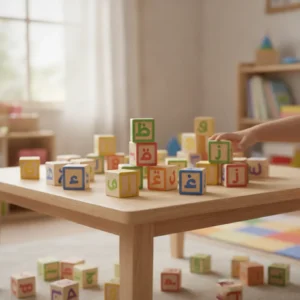
Parents love a timeline they can actually picture. So here’s roughly what progress looks like for a child attending lessons 2-3 times a week, with light practice at home.
Months 1-3 Letter recognition begins. Basic greetings, numbers, colors, family words. Simple listening comprehension. Lots of repetition, lots of pointing-and-naming.
Months 4-6 Short sentences start forming. Kids can introduce themselves, describe simple things, ask basic questions. Reading short words becomes possible with support.
Months 7-12 Conversational confidence builds. Kids can talk about daily routines, likes and dislikes, and simple stories. Reading short sentences independently. Writing starts to feel less foreign.
Year 2 This is where things click for a lot of kids. Vocabulary expands fast. Reading gets smoother. Grammar starts making sense instead of feeling like a list of rules to memorize.
Years 3-5 This is the fluency zone. Kids can hold real conversations, read age-appropriate texts, and express opinions — not just recite phrases. They start thinking in Arabic during conversations instead of translating in their head first.
Notice something? The biggest jumps don’t happen in month one. They happen in year two, after the foundation has had time to settle. If your child feels “stuck” around month five or six, that’s not a red flag. That’s just where the language stops being new and starts requiring patience.
Why Some Kids Learn Faster Than Others (Without “Being Smarter”)
I want to clear something up, because I hear this worry a lot: “Is my child slow at this?”
Almost never. What actually separates fast progress from slow progress is rarely intelligence. It’s:
- How often they’re exposed to the language (not just in lessons, but around lessons too)
- Whether mistakes are treated as normal or as something to be embarrassed about
- Whether the material matches their age and attention span
- Whether they’re having fun, or just enduring it
A kid who feels safe making mistakes will speak more, and speaking more is how fluency happens. A kid who’s afraid of getting it wrong stays quiet, and staying quiet slows everything down. This is honestly more about the teaching environment than the child.
How to Speed Things Up (Without Burning Your Kid Out)
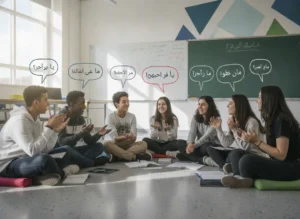
You can’t skip the process, but you can absolutely make it more efficient. Here’s what actually moves the needle:
Keep sessions short and frequent. 15-20 minutes daily beats one long weekly class for retention.
Build Arabic into normal life, not just “lesson time.” Arabic music in the car, labeling household objects, a bedtime story in simple Arabic — these add up more than people expect.
Don’t correct every mistake. Constant correction kills confidence. Let small errors slide while the bigger picture builds. Confidence first, precision later.
Match the dialect or MSA choice to the actual goal. Don’t split focus between MSA and a dialect too early unless there’s a clear reason to.
Celebrate small wins. Reading a word alone, understanding a sentence in a show, ordering something in Arabic at a restaurant — these moments matter more to a kid’s motivation than any grammar chart.
If you want the full picture on why this matters long-term, we’ve written about it in detail here: Why Kids Should Learn Arabic.
So, How Long Will It Actually Take Your Child?
Honestly? It depends on the child in front of you. But if I had to give you one number to hold onto, here it is: expect real, noticeable fluency somewhere between year two and year four, assuming consistent practice.
That might sound like a long time. But most parents tell us the same thing after a year in: it didn’t feel long, because the small wins kept coming the whole way through. First words. First full sentence. First time reading a sign out loud on vacation. Those moments happen way before “fluency” does, and they’re what keep kids motivated to get there.
If you’re not sure where your child should start, our Beginners course is built exactly for this — short, consistent sessions designed around how kids actually learn, not around a rigid textbook pace.
Ready to see how quickly your child can start speaking Arabic?
👉 Book a Free Trial and let’s find out together.