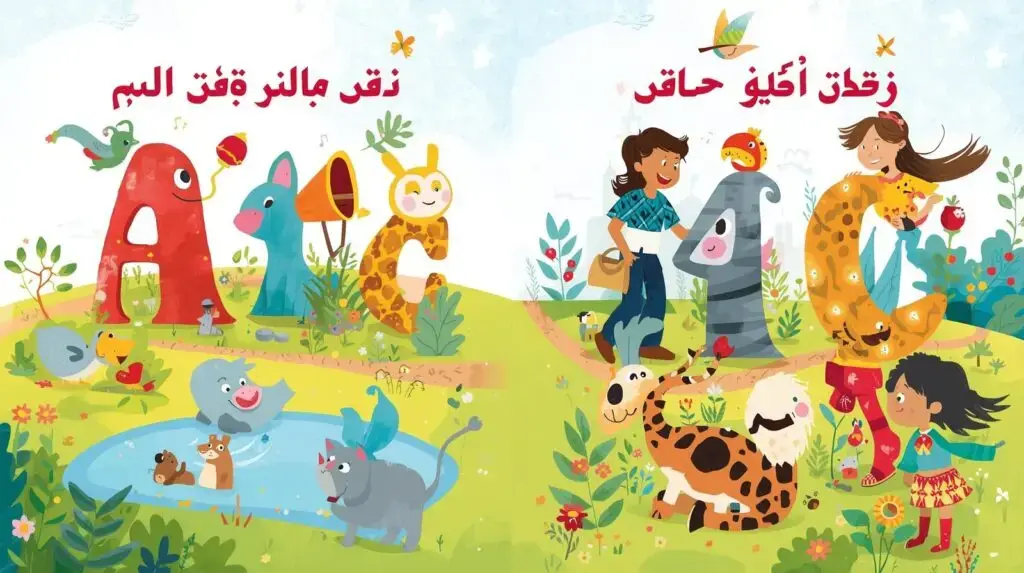
Learning the Arabic alphabet can be a thrilling adventure for children when approached in a fun, interactive way. Parents and teachers often ask how to make this process engaging, especially for kids who are beginners. This guide provides creative ways to learn Arabic alphabet for kids using games, storytelling, crafts, apps, daily routines, songs, family activities, and online resources. Whether your child is practicing reading, writing, or pronouncing letters, these methods make learning easy, colorful, and memorable.
Learn Arabic alphabet for kids through games – Playful Learning
Games are one of the most effective tools to help children learn the Arabic alphabet while having fun. Using interactive activities, kids can recognize letters, connect sounds, and practice writing in a playful environment.
if you are interest to read more about learn Arabic for kids full guide
Exciting board games for letter recognition – Engaging Boards
- Use colorful boards with Arabic letters to match the sounds of alif, baa, and other letters.
- Play memory games where children find pairs of letters or match vowels to consonants.
- Encourage kids to pronounce each letter aloud, developing speaking skills.
Interactive puzzles boosting memory – Mind Challenges
- Arabic alphabet puzzles help children associate letters with images.
- Tracing puzzles develop writing skills and hand-eye coordination.
- Use clipart and graphics of letters for visual learning.
Storytelling adventures in Arabic letters – Magical Narratives
Stories are a powerful tool to teach the Arabic alphabet because they engage a child’s imagination while reinforcing memory.
Magical tales introducing each letter – Creative Learning
- Invent stories around each letter, like alif the explorer or baa the brave.
- Connect letters to familiar words and objects in daily life.
- Incorporate repetition so children memorize letters naturally.
Heroic journeys memorizing alphabet – Adventure Learning
- Create adventures where letters are characters in quests or missions.
- Encourage children to write the letters as part of the story.
- Include references to Islamic words or Quran letters to enrich vocabulary.
Creative crafts for alphabet mastery – Hands-On Fun
Hands-on activities are perfect for learning Arabic letters while developing fine motor skills.
DIY art projects shaping letters – Arts and Crafts
- Create letter-shaped playdough models.
- Make coloring worksheets with flashcards to practice both writing and recognition.
- Encourage children to decorate letters with stickers or colors for visual learning.
Interactive apps and videos – Digital Engagement
Digital resources help children learn Arabic alphabet online in a fun, interactive way.
Engaging animations teaching sounds – Fun Technology
- Use apps with audio pronunciations, songs, and interactive videos.
- Include downloadable worksheets and printable materials for offline practice.
- Children can type letters, practice writing, and play games for reinforced learning.
Learn Arabic alphabet for kids daily – Consistent Practice
Daily exposure to letters helps children retain what they learn. Small routines create lasting habits.
Morning routines with flash cards – Start the Day Right
- Show a few letters each morning using flashcards.
- Encourage children to say the sounds and write them on a small whiteboard.
Evening stories reinforcing letters – Bedtime Learning
- Read short stories emphasizing each letter of the Arabic alphabet.
- Include Quranic letters for children interested in Islamic studies.
- Practice tracing letters before bedtime to reinforce reading and writing skills.
Fun songs and rhymes to memorize – Musical Learning
Catchy tunes for letter sequences – Sing Along
- Use songs to teach alif, baa, taa and other letters in sequence.
- Encourage children to sing along while tracing letters.
- Combine Arabic sounds with English explanations for bilingual learners.
Family activities for alphabet learning – Learning Together
Parents can turn learning Arabic letters into fun family time.
Group plays acting out letters – Active Learning
- Children act out the shape or sound of letters in a game setting.
- Create letter scavenger hunts around the house.
Shared meals discussing sounds – Practical Learning
- Point out letters on packaging, signs, or menus.
- Ask children to pronounce letters and identify vowels in words.
Online resources for young learners – Digital Support
Free websites with interactive tools – Resourceful Learning
- Explore platforms offering interactive Arabic alphabet lessons.
- Use videos, worksheets, games, and quizzes to practice reading and writing.
- Combine iOS apps, Android apps, and printable resources for a full learning experience.
Tracking progress in Arabic alphabet – Measure Success
Simple charts monitoring achievements – Motivation Tools
- Use visual progress charts with stickers for each mastered letter.
- Encourage children to practice daily and review previous letters.
- Track writing, reading, and pronunciation skills.
FAQ – Learn Arabic Alphabet for Kids
Q1: At what age should my child start learning Arabic letters?
A: Children can begin as early as preschool (3–5 years old), and daily short sessions work best.
Q2: How can I make Arabic letters fun for my child?
A: Use games, songs, storytelling, crafts, apps, and interactive worksheets. Repetition with visual and audio cues works best.
Q3: Can my child learn Arabic online?
A: Yes, with interactive apps, videos, online classes, and downloadable worksheets, kids can easily learn letters at home.
Q4: How long does it take to master the Arabic alphabet?
A: With daily 10–15 minute sessions, children can recognize and write letters in 2–3 months, depending on age and consistency.
Q5: Should we include Quranic letters while learning?
A: Including Quran letters enhances vocabulary, connects children to Islamic texts, and strengthens recognition skills.