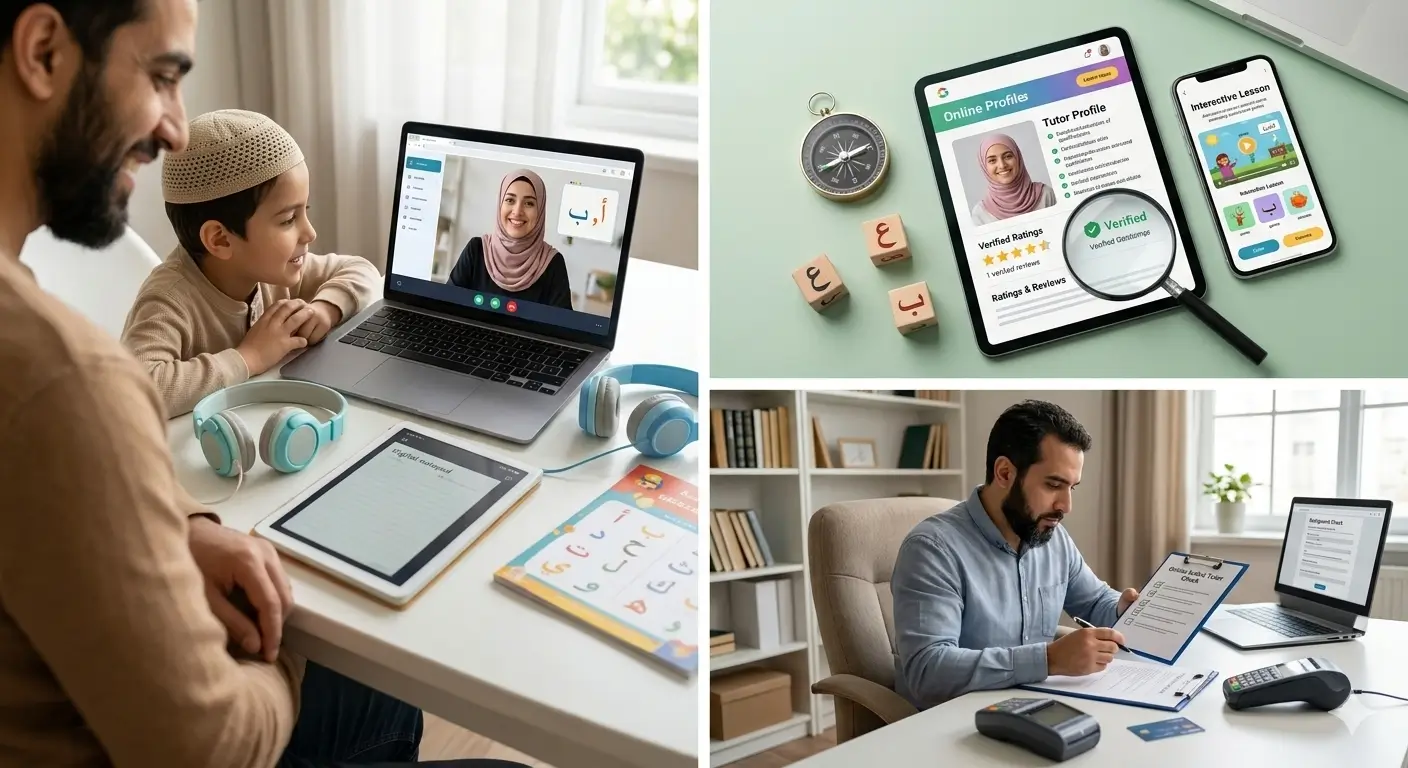

So you’re looking for an online arabic tutor for kids, and you’ve probably already noticed the problem: everyone’s ad looks the same. “Native speaker.” “Certified teacher.” “Fun and interactive lessons.” Every single site says it. None of them tell you what actually matters.
I’ve taught Arabic online for years, and I’ve also watched parents come to me after a bad experience with someone else — wasted money, a kid who now says “I hate Arabic,” and a subscription they forgot to cancel. That’s the real cost of picking wrong. Not just the money. The motivation you burn along with it.
So before you hand over your card details to anyone, here’s what to actually check.
1. Do They Teach Kids, or Just Teach Arabic?
Here’s the thing — being fluent in Arabic and being good at teaching Arabic to a seven-year-old are two completely different skills. A lot of tutors are excellent with adults. Structured grammar, long conversations, homework between sessions. Put that same person in front of a distracted eight-year-old and the whole thing falls apart in ten minutes.
Ask directly: “How many years have you specifically taught children, not adults?” A tutor who’s spent real time with kids will have an answer ready — games they use, how they handle a kid who won’t sit still, how they keep a five-year-old’s attention for 20 minutes without losing them. If the answer is vague, that’s your signal.
2. Do They Have an Actual Curriculum, or Are They Winging It?
Ask to see a rough outline of what your child will learn over the first month. Not a sales page — an actual lesson sequence.
A real program should be able to tell you things like:
- What letters or vocabulary get introduced first, and why in that order
- How they track whether a concept has actually been learned, not just “covered”
- What a typical 30-minute session looks like, minute by minute
If a tutor says “we adjust based on the child,” that’s fine as a general philosophy, but it shouldn’t be the whole answer. Flexibility without structure usually means the lessons drift and nothing builds on the last session.
3. Trial Lesson: Non-Negotiable
Never pay for a full package before you’ve watched your child in an actual session. I mean this one seriously — skip a tutor entirely if they refuse a trial or make it complicated to book one.
During the trial, watch for:
- Does the tutor actually get your child talking, or is it mostly the tutor talking?
- Does your child smile or laugh at any point? A good kids’ tutor makes Arabic feel like play, not homework.
- Does the pacing match your child’s level, or does it feel too fast or too slow?
If you want to see this in action rather than take our word for it, you can book a free trial lesson and judge it yourself before spending anything.
4. Dialect vs. Modern Standard Arabic (MSA) — Do They Even Ask?

This one trips up a lot of parents. Arabic isn’t one thing. There’s Modern Standard Arabic (used in writing, news, and formal settings) and there are regional dialects — Egyptian, Levantine, Gulf, and more — that people actually speak at home.
A tutor who doesn’t ask you which one your family needs is a red flag. If your goal is for your child to speak with grandparents in Cairo, MSA-only lessons won’t get them there. If your goal is reading the Quran or formal literacy, dialect-only lessons won’t either. The right tutor asks this question in the first conversation, not after you’ve already paid for three months.
5. How Do They Handle Attention Spans?
A 60-minute lesson with a six-year-old is, frankly, a bad idea for almost any tutor. Ask what session length they recommend for your child’s age, and be suspicious of anyone who pushes a longer package “for better results” without adjusting the actual lesson structure to match.
Good signs to look for:
- Sessions broken into short segments — a game, then a bit of writing, then a song, then review
- Built-in movement or interaction, not just staring at a screen
- A plan for what happens if your kid has an off day and won’t focus
6. Communication With Parents
You’re paying for this. You should know what’s happening in it. Ask how progress gets reported back to you — a quick note after each session, a monthly summary, access to see what was covered. A tutor who disappears into a black box and only resurfaces to ask for the next payment is not someone you want teaching your kid long-term.
7. Pricing Structure — Read the Fine Print
This is where a lot of parents get burned. Before you pay, check:
- Is it a subscription or pay-per-lesson? Subscriptions can be cheaper per session, but only if you’re actually going to use every session. Cancellation policies matter here — check them before you sign up, not after.
- Is there a minimum commitment? Some services lock you into three or six months upfront. That’s a big ask before you even know if your child likes the tutor.
- What’s included in the price? Materials, worksheets, recordings of the session — some of this is bundled in, some is an extra charge you won’t see until later.
You can compare structures across our own pricing options and course pages if you want a sense of what a transparent breakdown should actually look like.
Red Flags to Walk Away From
A few quick ones, so you don’t have to dig through a whole sales page to spot them:
- No trial lesson offered, or the trial is “watch a recorded demo” instead of a live session with your actual child
- Vague answers about dialect vs. MSA
- Pressure to commit to a long package before the first real lesson
- No clear way to see what your child is learning week to week
So What Should You Actually Do Next?
Honestly, the process doesn’t need to be complicated. Shortlist two or three tutors, ask the questions above, and book a trial with each before deciding anything. The right fit will be obvious pretty quickly — your child will either lean into the lesson or check out of it, and that tells you more than any sales page ever will.
If you’d rather skip the guesswork, our tutors specialize specifically in teaching kids — not adults with kids as an afterthought — and every family starts with a free trial lesson before paying anything. You can see how it works and book your free trial here.